I built and managed a repeatable implementation system for a high-volume learning portfolio that supported approximately 45 districts, 200 schools, and 15,000 educators nationwide across four annual implementation cycles.
The work required alignment across nearly 50 internal stakeholders, including learning designers, school-facing implementation leads, facilitators, data partners, and program leadership. The system connected timelines, resources, scheduling, facilitator readiness, communication workflows, platform coordination, and feedback loops into one shared delivery model that could be repeated, refined, and adapted year over year.
This case study highlights how I translated a complex program delivery challenge into scalable operational infrastructure.
4
Annual Cycles
Managed, refined, and repeated year over year
50 Internal Stakeholders
Cross-functional teams aligned through one shared delivery model
15,000
Participants
Approximate four-year implementation reach
Background and Context
This initiative supported a large-scale learning portfolio delivered across multiple districts, schools, and participant groups each year. Because the program repeated annually with new schools and stakeholders, the implementation model needed to be both consistent and adaptable.
Internally, the work required coordination across design, facilitation, school support, program operations, data, and leadership. Each team owned a different part of the delivery lifecycle, from content readiness and platform setup to scheduling, communication, facilitation, feedback collection, and post-session follow-up.
The Challenge
The central challenge was building a scalable implementation system where no centralized operational infrastructure previously existed.
When I began this work, individual contributors were responsible for scheduling their own professional learning sessions, tracking completion in their own ways, and managing follow-up independently. There was no shared source of truth for scheduling, no consistent way to monitor delivery progress, and no centralized system for viewing collective feedback across learning experiences.
As the program grew, this created several risks:
Fragmented Scheduling
Sessions were scheduled independently, making it difficult to see the full implementation picture across districts, schools, facilitators, and timelines.
Inconsistent Tracking
Teams did not have a reliable shared process for knowing what had been delivered, what still needed to happen, or who had completed each part of the learning experience.
Limited Feedback Visibility
Feedback existed in pieces, but there was no centralized way to view trends, identify patterns, or use collective data to improve future delivery.
Reliance on Individual Memory
Critical implementation knowledge lived with individual contributors rather than in a sustainable system that could support scale, onboarding, and continuity.
The system needed to answer a larger operational question:
How do you move a high-volume learning portfolio from individual coordination to scalable program delivery?
My Role
I served as the program operations lead responsible for building the infrastructure that connected strategy, design, scheduling, facilitation, implementation, and data review.
This was not simply a matter of maintaining an existing process. I built the system from a fragmented starting point, creating the workflows, documentation, tracking structures, communication rhythms, and feedback loops needed to support implementation at scale.
This required both strategic coordination and detailed execution: understanding the full system, anticipating where breakdowns could happen, and building processes that helped teams move through complex work with clarity.
What I Owned
- Centralized implementation guide
- Shared scheduling and work request workflows
- Delivery lifecycle mapping
- Cross-functional role clarity
- Facilitator readiness structures
- Communication templates and status updates
- Data tracking and feedback visibility
- Tool and automation coordination
- Synchronous and asynchronous support structures
- Repeatable annual delivery model
The System I Built
To support this work, I created a centralized implementation guide that served as the shared source of truth for the delivery process. The guide documented key dates, implementation windows, role responsibilities, scheduling procedures, Asana workflows, communication templates, Canvas processes, office hour structures, feedback systems, and post-session data review.
I also built the structures that helped move the program from individual coordination to shared implementation. Scheduling became more visible, responsibilities became clearer, communication became more consistent, and feedback could be reviewed collectively rather than in isolation.
Recognizing that internal stakeholders had different roles, schedules, and support needs, I built both synchronous and asynchronous support structures. Weekly office hours created a predictable space for live clarification, risk identification, and cross-functional alignment, while shared agendas and trackers allowed stakeholders to surface questions, document decisions, and receive follow-up support without requiring another meeting.
Shared Source of Truth
A centralized guide brought together timelines, roles, workflows, links, templates, platform processes, and decision points.
Repeatable Delivery Lifecycle
The system organized delivery into planning, preparation, scheduling, live delivery, follow-up, and continuous improvement.
Internal Stakeholder Support
Office hours, shared agendas, and trackers gave stakeholders multiple ways to ask questions, surface risks, and receive support.
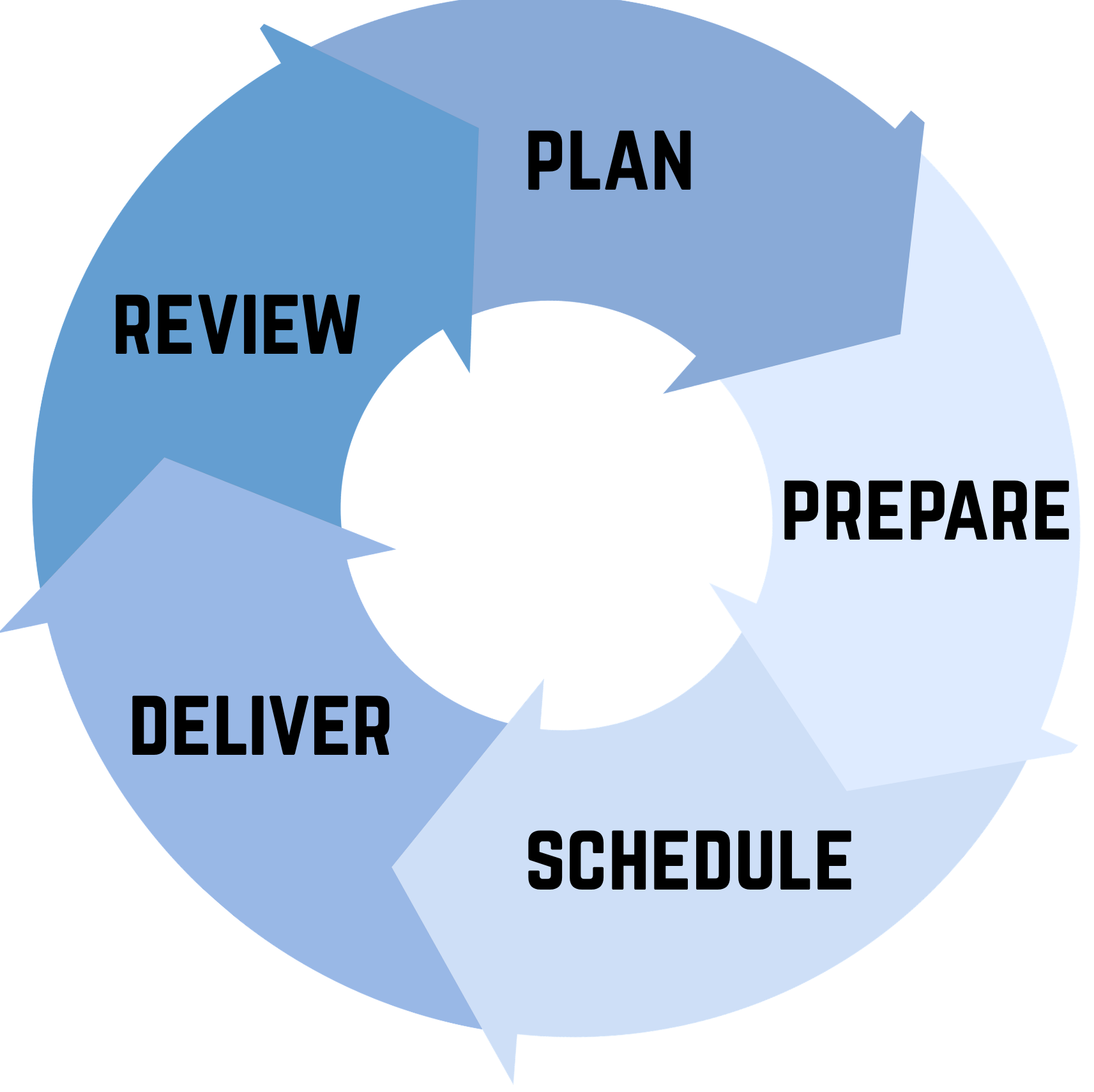
Implementation Lifecycle
The delivery model followed a structured lifecycle from planning through post-delivery review. Each phase clarified what needed to happen, who owned the work, and how teams would stay aligned across the implementation cycle.
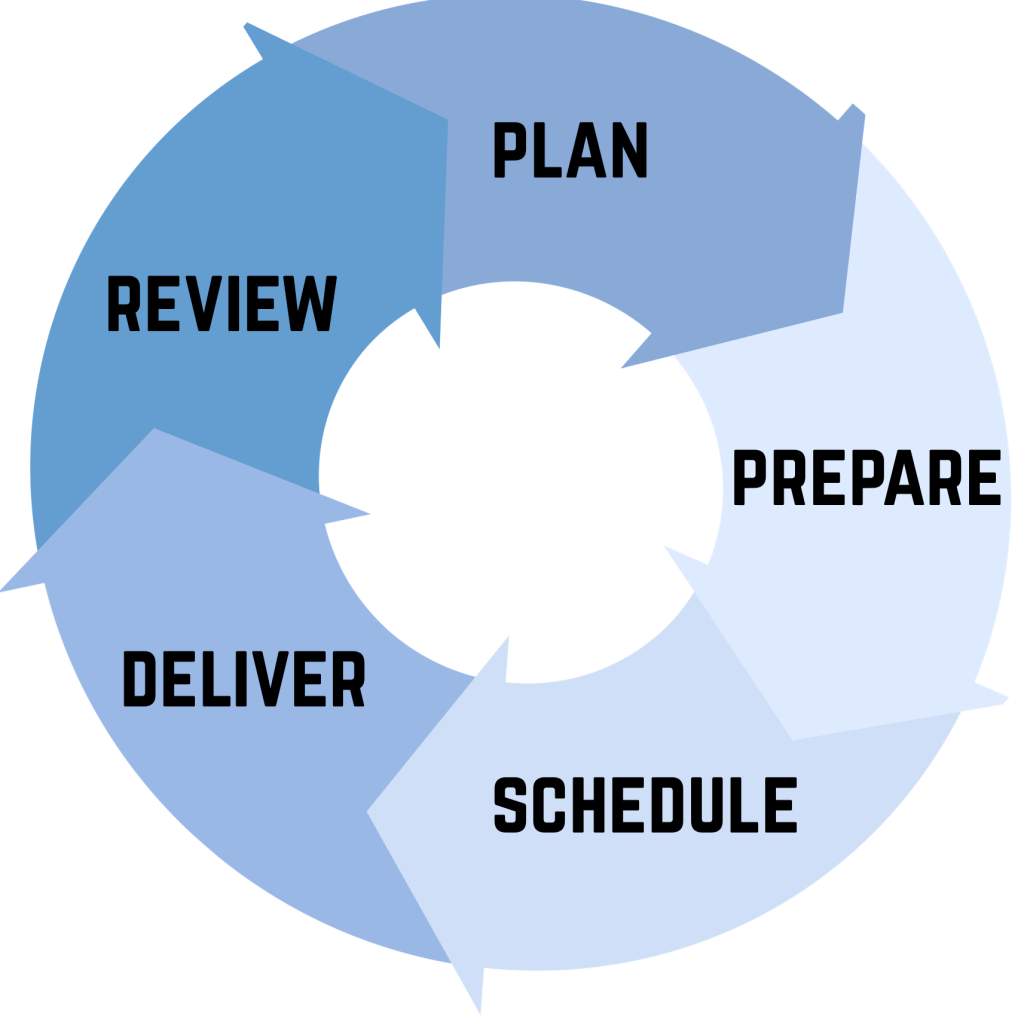
Plan
Define implementation windows, milestones, delivery expectations, and stakeholder responsibilities.
Prepare
Coordinate materials, facilitator readiness, platform setup, communication, and site-specific logistics.
Schedule
Use scheduling systems and work request processes to manage dates, capacity, exceptions, and assignments.
Deliver
Support live and self-guided learning through aligned roles, tools, communication, and facilitation structures.
Review
Monitor completion, collect feedback, review data, identify gaps, and refine future implementation cycles.
Tools and Systems
The implementation system relied on connected tools, automation, AI-supported workflows, and human checkpoints to reduce friction, increase visibility, and support consistent execution across the delivery lifecycle.
With hundreds of schools, shifting schedules, and multiple stakeholder groups involved, the system needed to surface accurate answers quickly: what was scheduled, who owned each task, what deadlines were approaching, where support was needed, and what feedback was coming in.
I designed workflows that connected scheduling, project management, communication, data tracking, and continuous improvement. Integrations between TimeTap and Asana automated task creation using event details from the scheduler. Once a learning experience was scheduled, related tasks, subtasks, assignments, and due dates were generated without manual input, dramatically reducing the time needed to manage changing dates, times, and delivery details.
Tools
Evidence & Artifacts
This case study is supported by selected artifacts that show how the implementation system was documented, communicated, and managed. The centralized source of truth for timelines, roles, workflows, links, communication templates and support processes. The entire document is provided below.
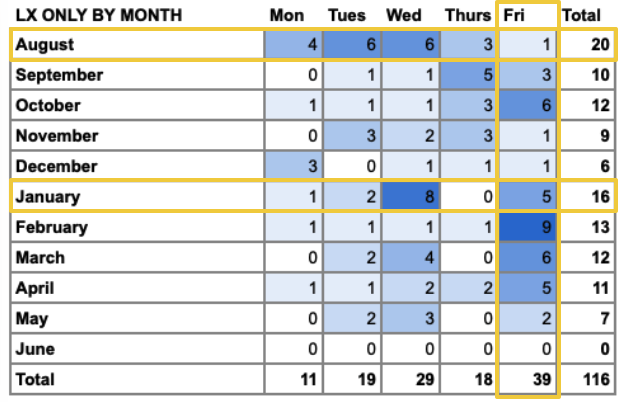
The scheduling data was used to provide live workloads for facilitators to support capacity planning. This chart shows that for this school year, August was the busiest month with 20 learning experiences scheduled with January coming in a close second with 16 learning experiences scheduled. This chart also shows that Fridays are the most common day for learning experiences and internal meetings should be scheduled on less busy days (Monday or Thursday).
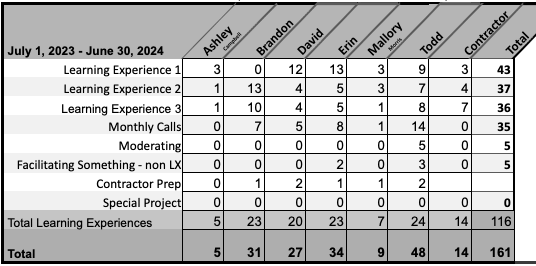
Also from the Google Sheet Dashboard, this chart shows the year breakdown by facilitation need.
Outcomes and Impact
This implementation system transformed a fragmented delivery process into a scalable, transparent, and repeatable program model.
Before this system, scheduling, tracking, and feedback collection were largely distributed across individual contributors. After implementation, teams had a shared source of truth, clearer ownership, centralized workflows, more consistent communication, and stronger visibility into delivery progress and feedback trends. This case demonstrates that large-scale learning implementation depends on more than strong content. It requires operational infrastructure that can align people, processes, timelines, tools, and data across a complex stakeholder environment.
The most important design decision was to treat implementation as a system rather than a series of individual events. By documenting workflows, clarifying roles, centralizing resources, and connecting tools, the work became easier to repeat, monitor, and improve over time.
Clearer Ownership
Stakeholders had a shared understanding of responsibilities, timelines, handoffs, and decision points.
Centralized Visibility
Scheduling, implementation progress, and feedback became easier to see across the full delivery lifecycle.
Stronger Alignment
Design, facilitation, implementation, school support, and data teams worked from a common delivery structure.
Consistent Execution
Centralized workflows and communication systems supported repeatable delivery across schools, districts, and annual implementation cycles.
Final Thoughts
This is one of the systems I am most proud of building because it created lasting infrastructure where none previously existed.
The work reflects my approach to program management: identifying where complexity is creating friction, building the systems that help people move through that complexity, and creating structures that can continue supporting the work beyond my individual role.
I am most energized by work that sits at the intersection of strategy, operations, learning, and people, where strong infrastructure makes meaningful delivery possible.
 Erin West