I developed a strategy proposal for building a sustainable community network that would strengthen stakeholder engagement, knowledge sharing, recognition, and continuous improvement.
The proposal outlined a scalable model for moving beyond one-time events or isolated communication toward a connected community ecosystem. The strategy included a digital hub, role-based engagement structures, professional learning opportunities, recognition systems, feedback loops, an implementation roadmap, and a measurement framework.
This case study highlights how I translate a broad engagement vision into a structured strategy that balances people, systems, and long-term sustainability.

Strategic Focus
Sustainable community network design

Core Audience
Demonstration Schools and key stakeholders

Strategy Model
Five connected pillars
Background & Opportunity
Demonstration schools are schools who have finished the program and continue to do great things. Demonstration Schools had the potential to serve as a powerful network of practitioners, leaders, and partners who could learn with and from one another. To fully realize that potential, the network needed more than isolated events or occasional communication. It needed a coherent strategy that created shared spaces, strengthened relationships, supported professional growth, elevated innovation, and used feedback to improve over time.
The opportunity was to design a community model that could support immediate engagement while also creating the conditions for long-term sustainability.
Strategic Challenge & Approach
Demonstration Schools had the potential to become more than a group of participating sites. They could become a connected network of practitioners, leaders, and partners who learned with and from one another.
The challenge was that a sustainable community network requires more than occasional communication or one-time events. It needs clear infrastructure, meaningful engagement structures, practical knowledge-sharing pathways, recognition, and feedback loops that allow the network to evolve over time.
I approached the strategy by asking three guiding questions which shaped the five pillar strategy outlined below.
The Five-Pillar Strategy
The proposal was organized around five connected pillars designed to move the network from isolated engagement toward a sustainable community ecosystem.
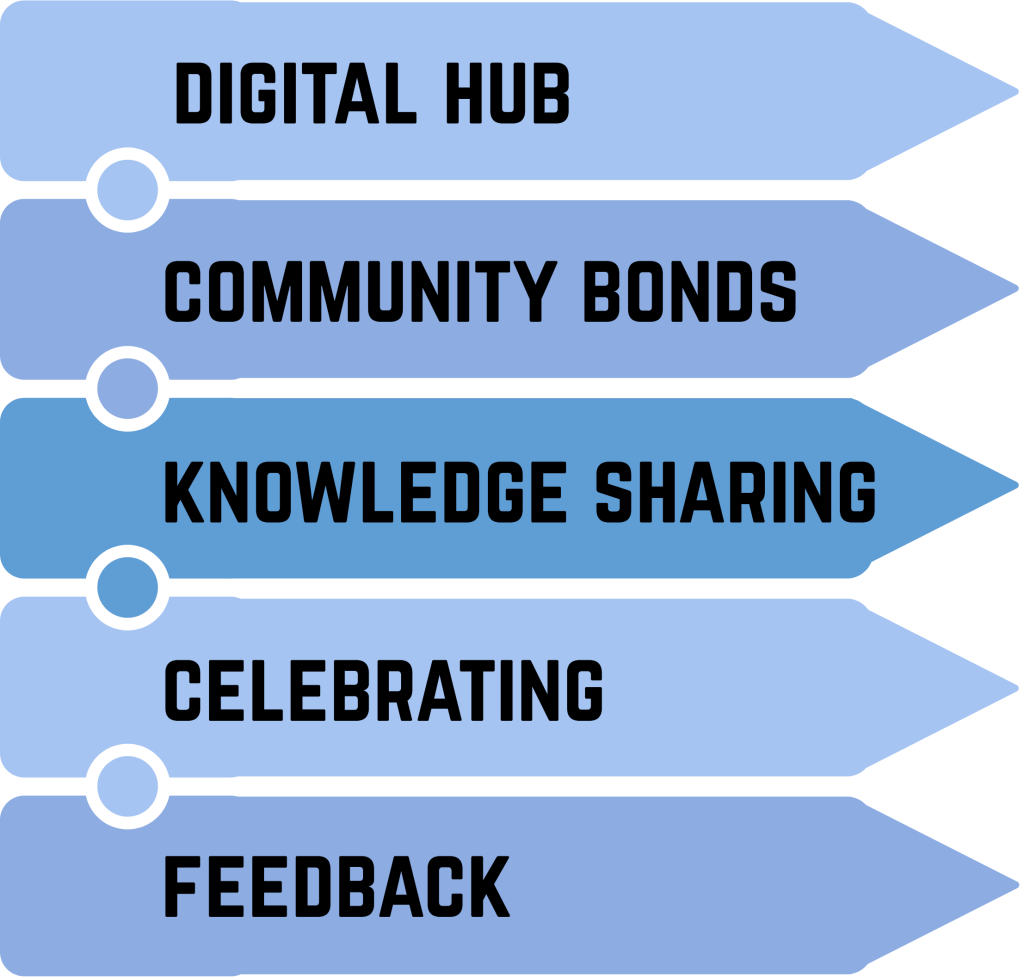
- Build a digital hub to function as a central space for updates, resources, events, discussion, collaboration and community identity.
2. Strengthen community bonds by creating both structured and informal opportunities for stakeholders to build relationships, exchange ideas, and engage across roles, schools and regions.
3. Make it easier to share collective knowledge that may consist of promising practices, field tested resources and learn from the shared experience of others.
4. Recognize and celebrate schools, stakeholders and community champions to reinforce a culture of contribution, innovation and shared success.
5. Use stakeholder feedback, participation data and engagement trends to improve programming, resources, communication and support over time.
Implementation Roadmap
The roadmap translated the community strategy into a phased 12-month implementation plan. It moved from early planning and platform development into pilot testing, launch, engagement, knowledge sharing, recognition, and continuous improvement.
Rather than treating launch as a single event, the roadmap positioned implementation as a staged process: build the foundation, test with stakeholders, activate participation, deepen collaboration, celebrate contribution, and use feedback to refine the network over time.
Phase Summary
Months 1–2: Planning & Strategy
Define the community goals, stakeholder groups, governance model, success criteria, and rollout priorities.
Months 2–4: Platform & Infrastructure
Build the digital hub structure, organize resources, create onboarding materials, and establish communication pathways.
Months 3–4: Pilot & Testing
Test the platform and engagement model with a smaller stakeholder group, gather feedback, and refine the experience before full launch.
Months 5–6: Launch & Activation
Launch the community network, onboard participants, introduce engagement opportunities, and establish recurring connection points.
Months 7–8: Knowledge Sharing
Activate webinars, showcases, resource sharing, peer discussion, and collaborative learning opportunities.
Months 9–10: Recognition & Culture
Highlight success stories, recognize contributions, celebrate innovation, and reinforce a culture of shared learning.
Months 11–12: Measurement & Improvement
Review participation data, stakeholder feedback, and impact measures to refine the strategy and plan for next-phase growth.

Measurement
A sustainable community strategy needs a clear way to understand whether it is working. The proposal included a measurement framework designed to evaluate participation, collaboration, knowledge sharing, professional growth, recognition, and continuous improvement.
The goal was not just to count activity, but to understand whether the network was creating value for stakeholders and helping the community grow over time.
Stakeholder Engagement
Event attendance, platform participation, repeat engagement, and role-based group activity.
Collaboration
Collaborative projects, peer review cycles, cross-school connections, and community participation.
Knowledge Sharing
Resources submitted, resources accessed, webinars hosted, showcase presenters, and repository contributions.
Professional Growth
Professional learning participation, ambassador involvement, micro-credentials, certifications, and presenter development.
Continuous Improvement
Survey response rates, satisfaction trends, feedback themes, and improvements implemented.
Risk Mitigation
The proposal also identified risks that could limit long-term success and named mitigation strategies to address them before they became barriers.
This was important because community-building efforts can lose momentum when participation is unclear, resources become static, recognition feels uneven, or feedback is collected without visible follow-through.
| Risk | Mitigation Strategy |
|---|---|
| Participation may remain low if stakeholders do not see immediate value in the network. | Launch with high-value onboarding, role-based spaces, clear calls to action, and early community champions who can model participation. |
| The digital hub becomes a static resource repository instead of an active community space. | Assign clear ownership for facilitation, content curation, announcements, event coordination, and engagement monitoring. |
| Varied resource quality from inconsistent or difficult to reuse user-submitted materials. | Create submission guidelines, tagging standards, review processes, and reusable templates to support consistency and usability. |
| Recognition feels exclusive when only the most visible schools or stakeholders are celebrated. | Recognize multiple contribution types, including growth, collaboration, risk-taking, innovation, and support for others. |
| Stakeholders disengage if feedback is collected but not acted on visibly. | Publish feedback themes, identify resulting actions, and communicate changes back to the community. |
Proposal Artifact
The full proposal outlines the strategic objective, rationale, five-pillar model, implementation roadmap, measurement framework, anticipated impact, and risk mitigation plan.
Community Network Strategy Proposal
A strategic proposal for building a sustainable community network for Demonstration Schools and key stakeholders.
 Erin West